
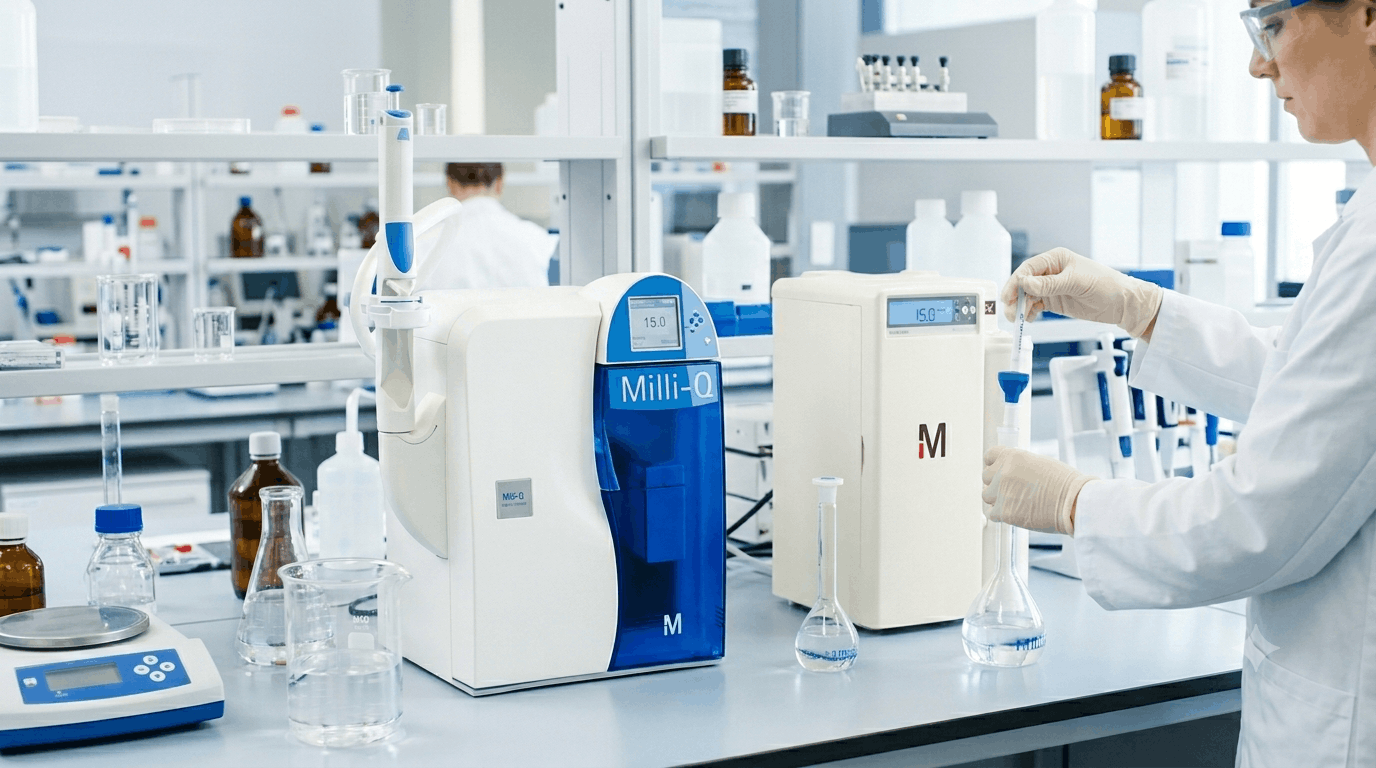

Water is one of the most frequently used resources in laboratories. Yet it is often overlooked when discussing accuracy, consistency, and reliability. Whether you are conducting pharmaceutical research, performing molecular biology experiments, preparing analytical samples, or running routine laboratory tests, water quality directly impacts the validity of your results.
Many laboratories worldwide rely on Merck Millipore Water Purification Systems for this reason. These systems are designed to deliver highly purified water for a wide range of scientific applications. They help laboratories maintain compliance, improve reproducibility, and reduce the risk of contamination.
However, choosing the right water purification system is not always straightforward. Different applications require different grades of purified water, and selecting the wrong system can lead to unnecessary expenses or compromised results.
In this guide, we will explore the different types of laboratory water, the purification technologies involved, and how to determine which Merck Millipore Water Purification System best suits your laboratory requirements.
Why Water Quality Matters in Laboratories
Ordinary tap water contains various impurities, including dissolved salts, organic compounds, bacteria, particles, and trace metals. While these contaminants may be harmless for everyday use, they can significantly interfere with laboratory procedures.
Impurities in water can affect:
- Analytical accuracy
- Instrument performance
- Experimental reproducibility
- Cell culture viability
- Reagent preparation quality
- Regulatory compliance
Even small concentrations of contaminants can alter chemical reactions, damage sensitive equipment, or generate inaccurate data. For this reason, laboratories use specialized water purification systems to achieve precise water quality standards.
Understanding Laboratory Water Types
Laboratory water is generally categorized into three main grades: Type I, Type II, and Type III. Each type is intended for specific applications and purity requirements.
Type I Water: Ultrapure Water
Type I water represents the highest level of purity available for laboratory applications. It contains extremely low levels of ions, organic compounds, microorganisms, and particulates.
Typical applications include:
- HPLC and UHPLC analysis
- LC-MS and GC-MS applications
- Molecular biology procedures
- PCR and DNA sequencing
- Cell and tissue culture
- Preparation of critical reagents
Because these applications demand the highest purity levels, laboratories often use dedicated Merck Millipore systems specifically designed to produce ultrapure water on demand.
Type II Water: Pure Water
Type II water is a high-quality, laboratory-grade water source suitable for many routine analytical applications.
Common uses include:
- Buffer preparation
- Reagent preparation
- Microbiological testing
- Clinical laboratory procedures
- General analytical chemistry
Many laboratories use Type II water as feed water for Type I systems, creating a complete purification workflow.
Type III Water: Primary Grade Water
Type III water is typically used for general laboratory operations where ultrapure water is not necessary.
Applications include:
- Glassware rinsing
- Water baths
- Autoclaves
- Environmental chambers
- Feed water for higher purification stages.
This grade offers a cost-effective solution for laboratories that require large volumes of purified water for non-critical processes.
How Merck Millipore Water Purification Systems Work
One reason Merck Millipore Water Purification Systems are widely trusted is their multi-stage purification approach. Instead of relying on a single technology, these systems combine several purification methods to achieve consistent water quality.
Common purification technologies include:
Reverse Osmosis
Reverse osmosis removes dissolved salts, particles, bacteria, and many organic contaminants. It serves as the foundation for producing Type III and Type II water.
Ion Exchange
Ion exchange resins eliminate dissolved ionic impurities, improving water resistivity and overall purity.
Activated Carbon Filtration
Carbon filtration removes chlorine, chloramines, and organic compounds that could interfere with downstream purification processes.
UV Oxidation
Ultraviolet treatment helps reduce microbial contamination and breaks down trace organic compounds.
Ultrafiltration
Ultrafiltration effectively removes endotoxins, nucleases, proteins, and microorganisms, making it ideal for life science applications.
Final Polishing Cartridges
Specialized purification cartridges provide the final polishing step needed to achieve ultrapure Type I water standards.
Choosing the Right Merck Millipore Water Purification System
Selecting the ideal system depends on several factors beyond water purity alone.
Consider Your Laboratory Applications
The first question to ask is how the water will be used.
If your laboratory performs highly sensitive analytical techniques such as mass spectrometry or molecular biology research, Type I water is essential.
For routine laboratory testing and reagent preparation, Type II water may be sufficient.
Facilities requiring water primarily for cleaning and equipment support can often rely on Type III systems.
Evaluate Daily Water Consumption
Laboratories vary significantly in their water usage.
A small research laboratory may only need a few liters of ultrapure water per day, while a large pharmaceutical facility may require hundreds of liters daily.
Choosing a system with the correct production capacity ensures efficient operation while controlling costs.
Assess Feed Water Quality
The quality of incoming water affects system performance and maintenance frequency.
Laboratories located in areas with hard water or high contaminant levels may benefit from more comprehensive pretreatment solutions to protect purification components and extend cartridge life.
Consider Regulatory Requirements
Many industries operate under strict regulatory frameworks.
Pharmaceutical, biotechnology, clinical diagnostics, and food testing laboratories often require documented water quality standards and traceability.
Merck Millipore systems are designed to support compliance with internationally recognized laboratory standards and quality requirements.
Common Merck Millipore System Configurations
Different laboratory environments often require different purification setups.
Type III to Type I Configuration
This arrangement produces primary purified water first and then further purifies it to ultrapure quality.
It is ideal for:
- Research laboratories
- Molecular biology facilities
- Analytical chemistry laboratories
Type II to Type I Configuration
This setup provides high-quality pure water that can be further polished into ultrapure water as needed.
Suitable for:
- Pharmaceutical laboratories
- Clinical laboratories
- Multi-user research facilities
Centralized Water Purification Systems
Large facilities often benefit from centralized systems capable of distributing purified water across multiple laboratories.
Advantages include:
- Consistent water quality
- Lower operating costs
- Simplified maintenance
- Improved laboratory efficiency
Benefits of Using Merck Millipore Water Purification Systems
Reliable Water Quality
Consistency is critical in scientific research. These systems are engineered to deliver stable water quality that supports reproducible results.
Reduced Contamination Risks
Advanced purification technologies help remove contaminants that could compromise experiments or damage instruments.
Improved Instrument Performance
High-purity water reduces scaling, corrosion, and contamination within sensitive laboratory equipment.
Operational Efficiency
Modern systems are designed for user-friendly operation, automated monitoring, and streamlined maintenance.
Cost Savings Over Time
Although laboratory water purification systems require an initial investment, they often reduce expenses associated with purchasing bottled water, instrument repairs, failed experiments, and regulatory non-compliance.
Signs Your Laboratory May Need an Upgrade
Many laboratories continue using outdated purification systems long after performance begins to decline.
Warning signs include:
- Increased maintenance costs
- Frequent cartridge replacements
- Variable water quality readings
- Unexpected analytical results
- Instrument contamination issues
- Growing laboratory water demand
Upgrading to a modern Merck Millipore Water Purification System can help address these challenges while improving overall laboratory productivity.
Final Thoughts
Choosing the right Merck Millipore Water Purification Systems starts with understanding your laboratory’s specific needs. Not every lab requires ultrapure Type I water for every application, and selecting the appropriate purification level can improve efficiency while controlling costs.
For advanced analytical research, molecular biology, and pharmaceutical testing, Type I systems provide the highest purity standards. Laboratories focused on routine testing may find Type II water sufficient, while Type III systems offer an economical solution for general laboratory operations.
By carefully evaluating your applications, water consumption, compliance requirements, and future growth plans, you can invest in a water purification solution that supports accurate results, protects valuable equipment, and ensures long-term laboratory success.
When precision matters, water quality should never be an afterthought. The right Merck Millipore Water Purification System can become one of the most important assets in your laboratory infrastructure.